
viernes, 30 de octubre de 2009
Do not preoccupy!!

jueves, 29 de octubre de 2009
Define what is time!

In this last chapter of the book “The Questions of Life” Fernando Savater talks about what is time. We all know what time is and what it defines, but if you want to put the definition of time into words it is very hard. Also it is very hard to say when did time start how did humans started to measure it and how it was define. This are very hard questions that many important philosophers and scientists have tried to answer, but could not give a clear answer. I think that it is not important to answer these questions like Pascal (French moralist) said; the only important period that matters is present because it is the only one that can make an immediate change.
My opinion is that we shouldn’t be worrying about what time is, how was it defined, or when did it started, we should neither be concerned about the past because let’s face it we can’t change it, we should only worry about the future because it’s the only tense that could affect us or our future. We should concentrate in the present and try to enjoy it the most, without worrying about anything else, time will give us everything.
miércoles, 28 de octubre de 2009
Past is gone

What is time? Maybe if you have a physics class in your schedule, you would recognize that time is a measuring system to sequence events to compare the durations of events and the intervals between them, and to quantify the motions of objects. But this is not the kind of time I am talking about. The time that I am trying to create a discussion about is what time represents to us human beings.
People always say that you should live each moment like it is your last because time is not running backwards, and it actually is not. Some people also say time will heal all injuries. This is actually a bad sustained argument, because I think time will not heal injuries, but the moments and event that you experience throughout the time that has elapsed since the beginning. Time is always going forwards, so if you have done something bad, you should regret it, but you will not change it, so you need to start looking for a solution, which will solve this problem. Time is a huge issue in human lives, basically our entire life is affected by time, there is day and there is night and there is nothing we can do about this, so all I would say is do not let anything slip away and try to do all the things you can while you are alive, because you can’t make time go backwards.
martes, 27 de octubre de 2009
Enjoy your life today, yesterday is gone and tomorrow may never come

lunes, 26 de octubre de 2009
As time passes by...
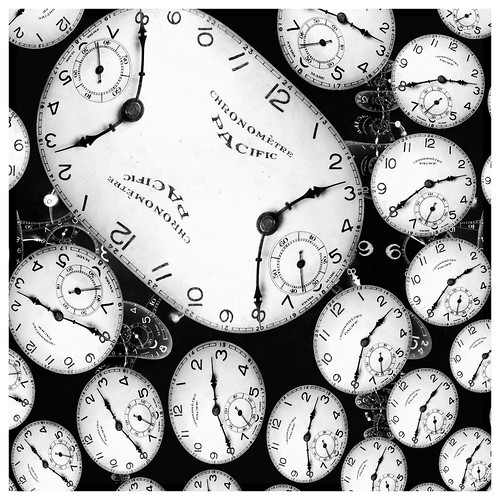
Chapter 10. When I first saw the title of the chapter I said to myself, this chapter is going to be interesting because it will talk about time. After reading it, I considered that it was without a doubt one of the most interesting chapters that I read.
Without a doubt, without measurements of time this world would be a chaos, that’s because measurements like hours, months, moon phases are all part of our lives and how we achieve our daily chores. We need time to have an order and also to have a standard way all the world communicate.
I was also very amazed of the dilemma about “this”. As Hagel said “...it is surprising that those things about which it seems we should be most certain...what we are tempted to call the - concrete, now, here, this – completely lose their content as soon as we try to think about them”. After thinking about this statement I was amazed because it’s very interesting of how when we try to be more concrete we end being more abstract. For example last time I received a call from my mom and she was trying to say me where a watch was located. She first said me, the watch is there in your room, the problem was that my room is big, so I then said like where in my room, she then told me like there in your desk and I had the same problem because my desk has many drawers. Therefore I started to tell her like is it in this drawer or on that drawer. We had a little discussion until I found it, which took me around 5 minutes.
So in resume, time is very important for humanity because it is the way we measure almost everything. Even though some times when we want to be concrete in time it’s very hard to be completely concrete.
viernes, 23 de octubre de 2009
Does it deserve to be Beautiful?
miércoles, 21 de octubre de 2009
B-E-A-utiful
What is beauty to us? Beauty is represented by what gives us pleasure. For example a friend and you are walking on the street. You walk by a statue and your friend tells you, Oh man that is beautiful, we usually answer, Oh yes it is, but after a while we start to think if the object he was talking about was actually beautiful to you. You need to start to consider things like if this statue really made you feel pleasure, or you were just answering to what your friend told you.
Everyone has a different point of view in this world, and for someone it could look that something was beautiful that for others was not. Some people have to consider all the outer events to even consider if something is beautiful or not. On the other hand I personally think that you need to look at something and at the instant you know if that is beautiful or not. You do not need to analyze a thing to say that is beautiful or not. It is supposed to be like if you look at something and at that instant you get a shiver, that is when you know something is really beautiful.
The Beauty of Life
When we think in something that for us is beautiful we take for granted that it actually is beautiful for everyone. This isn’t true, the last chapter that I have read Of the book “The Questions of life” called The Shiver of Beauty tells us that maybe all of us have very a different concept of beauty. What I am trying to say is that maybe something that you find extremely beautiful like a painting or a sculpture someone else can find not beautiful at all.
My conclusion and personal opinion is that beauty is that something that creates pleasure on your senses, it might be to the view, or in sound, in smell, the taste or even in the feeling. Beauty is something that makes our lives much more happy and that make us live with more joy.
lunes, 19 de octubre de 2009
Is it beautiful?
 Once you start thinking about it, it’s really hard to define the word “beautiful”. People may take a different meaning for the same word which isn’t a physical object which we could easily define, but can be granted as some sort of feeling, something subjective depending on what you like or dislike and then decide whether you think something is beautiful or not.
Chapter 9 talks about Cheops’ Great Pyramid dilemma, whether we can call it beautiful or not. Arguing that the pyramid is beautiful, we could tell that the fact that it produces visual pleasure to us or that the pyramid is unique, which makes it beautiful. Arguing against it, the pyramid was built by thousands of slaves who carried large stones and were treated very badly. In the moral perspective, the creation of the pyramids are wrong, which makes them not beautiful at all.
I personally think that the result should be the only think accounted as beautiful. The ways or actions that make possible the pyramid to exist doesn’t really matter. The fact that the pyramid is unique and gigantic or that the pyramid is a real masterpiece is what really makes it beautiful in spite of the morally wrong ways in which it was constructed. What you personally admire as beautiful is always the result, not the process of elaboration.
The Beauty of Artists
Savater says that artists are referred as creators which he then defines as somebody who has made something that would not have existed without him or her, somebody who brings something to the world. He then give us an example that artists paintings would have never existed if they didn’t existed, while in the other hand discoveries of things or medicines from scientists or people, could had been discovered or invented even though they hadn’t existed.
What he wants to say us is that artists paintings or sculptures are very important and are beautiful depending on the perspective in each of us. I agree with him stating this because he says that their works cannot be explained without them, without their vocation or personality. He also said that if they had not existed their works would have not existed either.
I therefore agree 100% with Savater because, that piece of art would have not existed if the artist didn’t existed. While the findings or creations of scientists can be found even though the scientists themselves hadn’t existed, someone else could have found them.
Savater also talked about how Plato disagreed with some artists and I somehow agree with how Plato taught. Why? Because I agree that some artists have very crazy ways of thinking and how they show they art, in this way they could change the way people think or the way people see things which can be sometimes dangerous or bad. For example in music, some artists could sing bad things in songs and make people act bad toward somethings. Today there are many songs that are considered bad and talk about death and killing of people, that’s were I want to get, stating that artists creations aren’t always good.
viernes, 16 de octubre de 2009
The level of Freedom
1.- "Freedom as the capacity to act according to one's own desires or projects." This term is heavily influenced to physical ways of expressing freedom, non-abstract situations. If we think or desire something anxiously we act to transform it from a thought to a tangible thing, trying to introduce that thought of ours to the reality we all live in whatever the purpose is.
2.- "The freedom to want what we want and not just to do, or attempt to do, what we want." Attention to this term, it is only possible inside the mind of every person and it is not a plural freedom, like the number one slightly attempts to be. This freedom is more psychological and it is undeniable, every one has thoughts about what happens, what hasn't happened and what will happen.
3.- "The freedom to want that which we do not want, and of not wanting what in fact we want."
This freedom refers to when someone wants to be someone but he "wishes" to be different. For example a man who wants to have kill all the people in the world, but at the same time he wishes not do be that man, because it goes against what he values, then he is wanting not to be what he wants to be. This term is confusing and appears to have no ending.
Every single term has freedom used in a different way, but it is only the middle term the one I trust more, because is more simple and invulnerable, not even a God can forbid me to think what I want to, and in this sense I think we are the most free of all.
jueves, 15 de octubre de 2009
Our "freedom".

Another example of violation of liberty, I think, is when someone introduces a subliminal message of any kind on other people, this is a violation to freedom because you should be able to make choices freely, when someone induces you, unconsciously, an idea he or she is violating your freedom to choose.
I am also aware that many people misuse the concept of liberty and transforms it into libertinism, I think that the main reason that sometimes there are lots of limits or boundaries in “liberty” is because many people transforms liberty into libertinism by doing whatever they want and even brake some laws arguing that they are “free” to do what they want, or says “I live in a free country”. So in order to get our true freedom we should start to respect others freedom.
miércoles, 14 de octubre de 2009
Freedom isn't free

Almost every person thinks that the concept of being free is doing what you want, when you want it and how you want it. But actually there is much more than that to be free. I mean of course you need to be free to do what you want but you also have to be aware of certain factors. For example, you are free to choose if you want vanilla or chocolate ice cream, but you are responsible of knowing what is going to happen after, for example if you are lactose intolerant. In other scenario, if you are in a life-death situation like the one of the captain and his crew travelling with a cargo and they are hit by a storm, and the only way of surviving was by throwing away the cargo. In this case the captain has the freedom to choose if he wants to throw the cargo and survive, but loose the thing the trip was about, or keep the cargo and die. This is a little extreme situation, but it is an easier way to make a decision.
So everyone has the freedom to do what they want in one way or another, but we have to take all the factors that surround it.
lunes, 12 de octubre de 2009
Freedom and responsibility

In simpler words, for me personally, freedom involves much more than only thinking and wanting what we want, but we need to be responsible for our own free actions. If you are totally free, you may do whatever you want to do, for example getting drunk everyday of the week. I mean you could do that if you want to, but you need to be responsible for that action. You may not want to assume the responsibility of the effects or the action in order to get drunk.
Freedom is doing what we want to do, without anyone telling us what to do. But in order to be completely free, first of all, you need to be able to do it. If there is no possible way of achieving our goal, then we can argue that we are not totally free. Secondly, you need to take the responsibility of you action. Freedom is a very complicated word to define and people define it in very different ways. For me, freedom and responsibility are linked; you can’t be free if you are not responsible.
Liberty

In this Chapter, number 6, Savater talks mainly on Liberty. I think liberty is a very important and interesting thing to talk about. Liberty for me is to do whatever I want at the time I wish, which means I have freedom of choice and thinking.
Sadly in today’s world there are thousands of people with limited liberty or sometimes null liberty. People who are kidnapped are taken out from their liberty and need to follow orders.
Liberty is always in hand with responsibility. As Savter says, if we have liberty, we also have responsibility. For example I have the liberty to get in my car and drive to school and it’s also my responsibility to attend school. If I’m bored or I don’t want to go to school, I can do that and not go to school because I have the liberty to choose what I want, but the problem here is that we are not having responsibility of our acts.
Same goes with drinking and driving. I have the liberty to drink, go to parties and if it’s necessary drive there. My responsibility then is that I must know if I am able to drive or not, and if I am in a very bad mood or not good to drive I can tell a friend or take a taxi.
As we can see every liberty and every action we make with that liberty also has a responsibility, therefore with the education we have gathered throughout the years, we should know what’s good and what’s not. This way we can make good decisions that wouldn’t affect ourselves. So in resume we have liberty, but we should make choices or acts with a lot of responsibility.
viernes, 2 de octubre de 2009
Cause and Effect
jueves, 1 de octubre de 2009
The universe: an enigma.
While we can’t get these answers some of the greatest philosophers have started to analyze these enigmas and have profoundly thought on this subject. Some of them have come to the conclusion that the arrangement of the universe is “cosmic” or “chaotic”, others have said that the size of the universe is infinite so it has no end, also some philosophers disagree is the universe is a total thing (seeing it as a whole) while others thing that the word universe is a placeholder for all the parts that the universe is composed of. My conclusion is that all of this ideas are useless, because it will come the time that scientific discoveries will explain all of this, making our old ideas wrong and useless.
miércoles, 30 de septiembre de 2009
Worlds?... Word
Since the beginning of philosophy class, we have talked about what philosophy is, what we should expect about death, even that we are or we are not, that we need more things to survive than animals. But one thing that we have not spoken about is about things bigger than ourselves.
There is something in our human nature that always makes us classify things, and this is no exception. Fernando Savater tells us that we classify our world in many different ways. We start little, like our family, closest friend or schoolmates; but it suddenly increases to a point we do not just take people in our country is in our personal world, but also THE WHOLE EARTH. Savater makes a really good point, I think every human alive does this unconsciously; each and every one of us has this divisions in their life.
Even though we have too many worlds to live in, the ones that we feel more comfortable and covet the most are the smaller worlds that we live into. For example, I would choose my family over my friends, and my friends over my neighbors and so on, and I am sure everyone would do the same.
lunes, 28 de septiembre de 2009
Philosophy over Mythology

The Universe
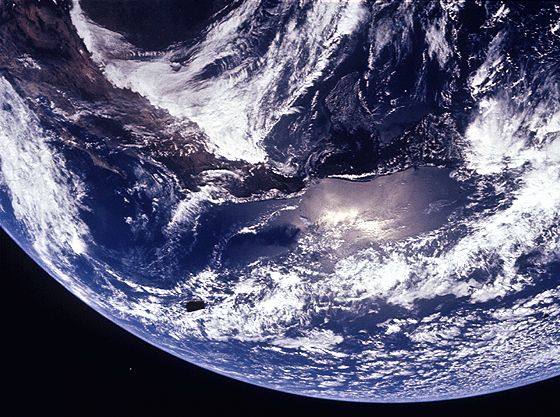
Here we are now in Chapter 5, in which the main topic is the Universe. In this Chapter Savater talks about the Universe, his perspectives about it, as well as the way he thinks of it. He also asks himself 3 major questions .
So Savater talks about how we “live” in different worlds, first of all there’s this world called our family, friends, known places, etcetera. Then he talks about the next step, which is like the cultural and social place I live in. He then talks about the subsequent places, in other words, he goes from smallest to biggest until he reaches outer space. Savater basically talks about how we live in mini-worlds.
He then makes a statement to which I totally agree, in Page 73 he states “By the way, what is most noteworthy in this series of worlds is that those most vitally important to me are precisely the smallest and narrowest”.
I agree with this statement because for me and I think, for many of us, this is a truth . Many of us care only about what happens on our world, it could be in our school, home or with friends. Some care more or less of what happens on their city or country, but almost none of us care about what happens in other countries or in the outer world, even though those decisions can affect our lives.
For example nowadays some countries are testing nuclear weapons, I really don’t care because it isn’t happening in my country nor near of it, and I think many of the people whom I’m related don’t even know what’s happening. But I think that we should really care because those decisions or actions can really hurt us in a future. So in resume I think that we should really care of everything, even though it doesn’t really affect us directly, we should care of ourselves and others.
viernes, 25 de septiembre de 2009
The Three Humiliations
First of all, in the book we find the first humiliation: the works of Copernicus, Galileo and Kepler (the Earth, was removed from the center of the universe). This humiliation was really important, it demonstrated us that we are not the center of everything and instead we move around a star.
Secondly, Darwin explained that we are not the perfect image of God, neither created by Him. He explained that we are the result of continue genetic mutations. The Ego and beliefs of what we contempled as Real, were dumpted down and proved incorrect. This means that several pilars of human thinking hd to be substituted now by new ones, radical ones.
The third one was from Freud, who induced us to see how our unconscious impulses found ways to manipulate our conscious. Signifying that from now on people could be informed that theology in general was not as we pictured it.
In all humiliations we learned that we are not what we think we are. We are what we do not wish to be, even if we reject it. I think we shouldn't stereotype ourselves as God's image, but part of God itself, it could be more abstract and not so literal.
jueves, 24 de septiembre de 2009
Humans, superior to animals?
After this we have to consider, what makes us so superior from animals? My personal opinion is that there are many more things that differentiate us from animals. We can distinguish the good things from the bad, we can analyze and understand why do things happen, we can communicate a lot more than animals, we can express our feelings, but the main difference that I found between animals and humans is that us as human can learn almost things while animals just learn what is enough for them to survive. My conclusion is that we are more developed than animals, not superior or inferior just more developed.
miércoles, 23 de septiembre de 2009
Come On You Chicken...

What do you mean when you say humans are animals? Charles Darwin has proven that we are descendants from monkeys, but we are not the same. Some scientists have made studies that prove that between the chimpanzees and us, there is a 90 per cent equal chromosome, but that does not mean we have to act like chimps. The great thing that differentiates us is we have to learn more to survive that chimps do. We use more our brains, instead of chimps just using their instinct to survive. So we could say we are descendants from the monkeys, but we have evolved to become a smarter more efficient race.
We can be compared with animals but only in certain aspects of our life. People use some metaphorical comments related to animals. For example, when you are afraid people call you chicken, or when you are being really inappropriate or doing something bad they call you something like donkey (ass). But this does not mean we are a chicken or an ass. So even though people impersonates us as animals does not mean we are one. (Even though we are more complex animals). So I think just because people call us something we are not, it just impersonates us.
martes, 22 de septiembre de 2009
Animal or Human?
Also I liked the fact that he used Pico’s quote “the most wonderful thing about man is that he remains open and undetermined”. I think this is really a big difference between what we are and what animals are. I think animals are “programmed”. They do what their instincts tell them to do; they have a prestablished way of behavior. In the other, humans have free-will. We decide what to do and what not, we can do something against our beliefs, against the ideas we have been raise with, because we have the privilege of doing what we want, even if we know is right or wrong.
I really liked this chapter because it presents more clear ideas that the previous chapters and I found very interesting some of the points presented in the chapter.
lunes, 21 de septiembre de 2009
The Characteristic Animal
Here’s my point of view from this statement, I think Savater is correct. Why? Animals only seek to be stable and with their requirements fulfilled, after they achieve this they are okay and they don’t search or start to look for other things. In the other hand, in humans were always trying to be stable and have everything we need to live (water, food, electricity, etcetera), but the problem here is that we are not satisfied with these things that are required to live well, we always try to find new things or seek new ways to make or gather things.
For example, there’s this experiment about the Large Hardon Collider about the particles, even though scientists have stated that it can make a black hole and create problems to Earth, we as humans don’t take it into consideration and want it to make it happen. There are many examples as the one I gave before in this world, examples where humans aren’t satisfied with what they have and are always trying to look for many things, there is never a time where we could say we have finally reached it and have everything. As Savater said before “...humans use it (intelligene) to discover new needs”. In resume, humans use intelligence to live well, but sometimes we want more things that we can't have.
viernes, 18 de septiembre de 2009
What am I?
jueves, 17 de septiembre de 2009
Reality or Illusion?

Would you believe someone, if he or she told that everything you have lived is an illusion, or maybe a dream that a higher force is controlling. Probably you would think of that person as someone who is completely insane. Well, Rene Descartes one of the major philosophers of the seventeenth-century came up with this idea. He put forward the idea that what we consider to be a reality could be a simple dream. This idea that I read on the book “The questions of life” made me think about what is real and what isn’t.
I thought a lot about this idea, which Descartes brought up, but I came to the conclusion that it doesn’t matter if it is true or not, it could even be impossible to know if what we live is a reality or an illusion, what matters is that even if you find the answer for this it would not make any difference, we would continue to live our lives the same way as if nothing had changed for us.
The conclusion that I get from this is that we should not worry about what is real and what isn’t, life is too short to be asking this kind of questions, we should enjoy life as much as we can and live happy.
Reality?
Every once in a while, I stop thinking about what is happening in the world, and ask two simple questions how do I know everything we experience is real? Even more personal how do I know I exist? The funny part of all this questions is that I was not the first person that asks this question, and I am certainly not the last person to ask this question. Before me, a lot of people have been asking this question and fortunately for me a person answered this question so I could understand a little bit more about my existence. Rene Descartes came with the quote “I think therefore I am” which pretty much says that because we think that we exist because we think of us existing. I think Descartes does not really have a point because he says we have to be conscious that we exist to actually exist. But how do we know that someone created that conscience to think that we are conscious and this is actually real. But we are never going to be certain of what is real and what is not. The only things we can do is live our life as this is real, and keep asking questions until we get to a real answer.
martes, 15 de septiembre de 2009
A dream or not?

I reasoned this statement and I think that I can’t be sure about nothing. There is no way to prove or deny Descartes thought. But what I’m arguing about his quote is what difference would it make if everything is a dream or not? I would live my life the exact same way because if and only if is “proven” to be right, I will still be in my eternal dream and I can’t do nothing about it. As Savater says, “To be always dreaming would be the same as never to dream”. If we were always dreaming, we wouldn’t know what reality really is. If this was the case, we have never experience pure reality. So it doesn’t make a difference, a dream or not a dream, we exist in some way that is for sure.
lunes, 14 de septiembre de 2009
I'm in and out...

In this chapter we realize that there are some philosophers that contradict each other, or well have similar thoughts. In this chapter I was amazed by the thinkings of the french philosopher René Descartes. The thing I was most amazed of was the one where he says that everything even us form part of a dream. That’s when I started to think that eventhough he defends his sayings by telling many other things, I do not agree with him. First of all how reality can be part of a dream if we are alive and have a soul or who can say that there are two people playing a game and we are part of it (the players are the God and the devil), how can you prove it.
I think that we are alive and we are in a reality not in a dream, we are people that have the ability to think, dream and interact with many other people that have almost the same characteristics as us.
Where I do agree with Descartes is with his famous quote “I think, therefore I am”. , This quote proves us that we actually exist and therefore I think this help us realize that we are real, exist and therefore are part of a reality and not a dream.
Each of us can have different points of view, but this is how I see it. In resume, with just the simple fact that because we have a soul, we exist and believe in a god we are part of reality nor a dream. Happy holidays!
viernes, 4 de septiembre de 2009
"The TRUTHS of Reason"

jueves, 3 de septiembre de 2009
Truths and Knowledge

I’ve got to be honest until about a week ago I thought that truth were universal or absolute, but since I’ve read this chapter I’ve realized that I was wrong that truths are relative, so it depends on our own point of view. This kind of thinking is called relativist, which means that you believe in relative truths not in absolute truths. So in conclusion everyone lives in their own “world” of truths that vary a lot depending on your culture, religion, ethnicity, etc.
miércoles, 2 de septiembre de 2009
There is Not An Absolute Reason

“Once the people begin to reason, all is lost” I begin with this quote from the great French philosopher Voltaire, because I think it supports what Fernando Savater spoke about in this chapter. I also think that when we start to reason, is the same as when we start to think, we cease our thirst of learning more, and we conform with what we know. But, Who’s reason is the right one? How do we know who is right and who is not? I think no one really has the reason, because, if I think I am right in something, some guy in some other place with the same line of questioning might think he is right, but with a different answer.
In our times we grow up thinking we know everything and we start to get a little arrogant. But the is a time when we ask, How much we know? And the answer is “we do not know”, and because of this if we think we know something we are lost. I think we should gather almost any knowledge we can of a certain subject and then make one reason from all that knowledge, it can get close to an absolute reason, but it will never be, and reason will always be relative.
martes, 1 de septiembre de 2009
Knowledge in Humans
But ther’s a time when we question ourselves if the knowledge we got when we were young will help me survive in the future, or if the person that told me some facts were correct. As Savater says “I must seek arguments that enable me to accept or refute my knowledge”
In my opinion we should sometimes verify if our knowledge is correct or not. Eventhough I think that the knowledge you get through experience is something you can’t seek arguments for or question it because it’s something that you have already tried or used.
In the other hand I think that the knowledge you must check or well, prove it right, is the knowledge acquired by tellings from others. Why? There are many people that could tell you that they are right and have a wrong answer. For example in my family there’s this uncle who always wants to be right and always wants to tell the others that he’s correct in everything and that you can’t never change his mind. One time there was this questions about wether or not a politician should rule the city, he insisted that he shouldn’t, but the others said yes. He got so angry that he shouted “Okay you have the reason” and he left. This is when you see that you can meet people saying that their beliefs or knowledge are the only one’s, even though they could be wrong. So this is when we should verify our knowledge and reason it. And be aware of those persons!
Knowledge?

viernes, 28 de agosto de 2009
Let us begin with death
I don't know exactly why is that people get afraid from death, it's not like its not going to happen to someone, everybody is going to experience it at certain time, but still, why would we have to worry about it if we are not even on that state right now. Why don't people worry about life instead, about teaching their children and other people to live their lives and not to fear about things that haven't occurred yet. I clearle agree with epicurus where he said that we should not fear death cause we haven't experienced it. In my opinion death is not here yet so let it come at the time it is going to arrive, try to explore all what you can and be comfortable living, while u still can.
jueves, 27 de agosto de 2009
Let us begin with death

The fear to death is no other thing that the fear to the unknown, the fear to the possibility of experiencing something at anytime that no one, who can talk with us about it, has experienced it. I think that we shouldn’t be scared of dying, when it come we should accept it as it is and to take advantage of that experience to use it, maybe, in other life.
miércoles, 26 de agosto de 2009
Why philosphy?
All but Death, can be Adjusted

I begin with this quote by Emily Dickinson, because I think is the simpler way to define what death is; you as a person can adjust everything but death. You do not know when is going to be your time to die, you just die. Like Savater
said, there is nothing more personal than death, because is destined to each and every one of us. We cannot escape death; it is going to happen at the time that was destined to you, it can be as insignificant as going down the street and getting run over by a car. Some people say, they have tricked death by surviving an airplane crash, or a sinking boat; but actually it was just not the time for them to die.
If we know that we are going to die, why is dying so scary to us. Maybe is because we do not know what is after our time in this world. Maybe because we are so comfortable living out here that we do not want to leave this place, these are some of my theories by which we are afraid to die. But at the end, we all will have to die. This is what makes us human, this is what humanizes us; at the end we accept that we are going to die and by this we enjoy each last event even more.
martes, 25 de agosto de 2009
Afraid of death?
 Who isn’t afraid of death? By only thinking about it, people become nervous, angry or depressed. Knowing that our life is going to end someday, becomes in the most tragic thought you could have. One day, when I was about 6 years old, my grandfather died and I remember watching everyone crying and depressed, and I never understood why until later on when I became conscious that one day, sooner or later, it all ends.
When you realize about death, we appreciate more everything. Every second, we are closer to death and there’s nothing you can do about to stop the clock from ticking. Talking about it, thinking about it, even dreaming about it, is uncomfortable.
I’d always question myself, what will happen to me when I’m gone? I think that you can’t just disappear and that’s the end of your story, something else MUST happen! But after reading chapter one I realized that instead of worrying about what will happen to me after life, I should start enjoying it because you never know when death is coming upon us. Every moment can be our last and I’d came to realize that you need to enjoy life as much as you can while you have it because as Savater quotes “Although at times death may seem improbable, it is always possible”.
lunes, 24 de agosto de 2009
Let us begin with death

In this first chapter the author talks about death. For me death is something I’m scared of and personally something that I hate to think about. I also hate and fell uncomfortable for a long time when someone familiar or something familiar (dog, fish, cat, etc) dies. It makes me feel very depress for a long time.
While reading the chapter I realized that there are many questions and contradictions towards death, that I also have or well have think of once in my life. For example I once passed something similar to the beginning of the chapter when I was younger I don’t know what made me think of death, but it made me feel very bad and made me cry, I just can’t forget that day (I couldn't’t sleep until the next day). It made me think of what would happen after I died and many other questions.
I found a quote from Spinoza “A free man thinks of death least of all things, and his wisdom is a meditation of life, not death”. I think that yes I agree with what he’s trying to say because I don’t find any positive things thinking about death, I really prefer to think about my life, my future, my family and all the years that I have ahead of me. I think that everyone instead of thinking of death should live their life and pursuit happiness.
So in resume, death is something that will happen to everyone in this world. Some people really like to think of and believe in eternal life, but for others (like me) is something that really prefer not to think of.
jueves, 20 de agosto de 2009
Why Philosophy?

Philosophy is to understand why things happen, to get to know what is the purpose of all actions that happens around us, we must not accept things because they just happened, we must find why do things happen, how does that affect us and the people who is around us. This means that we must do some critical thinking in everything that happens around us, we need to analyze and reflect why things happen. To conclude I must say that if we think more philosophically and also do more critical thinking the world we live in would be a better place for everyone.
miércoles, 19 de agosto de 2009
"The Acme Of Life Is The Understanding Of Life"
detail+larger.jpg)
Since the beginning of times, human beings have had the necessity of understanding things, they have created many different sciences in which they can explain certain concepts of our life; some other things cannot be explained with scientific methods. This is where philosophy gets into the picture. I have always asked to myself, why is philosophy important for us human beings?
After I began reading the Questions If Life by Fernando Savater I realized that not everything in life is explained scientifically or even religiously. Learning is the base of philosophy; Socrates said, "I only know that I know nothing", this means we will not know everything there is; we will continue learning until we die.
There is three ways of getting to know something, there is information (the Facts), there is knowledge and there is wisdom (how we interpret knowledge and information). Science consists in information and knowledge, philosophy is made of knowledge and wisdom. This is useful because even though we get some answers we keep doing more questions and we do not get a definite answer. The person who has stopped asking questions has stopped learning which in this case, ended with the cycle of our life.
In conclusion, philosophy has been here since the Greeks and before and will continue to exist. Philosophy makes us understand the things science cannot, so it will exist until the end of times.
martes, 18 de agosto de 2009
Why philosophy?

I’d always hated the idea of having a philosophy class, but after reading the introduction of the book “The questions of life”, I’m getting to know that philosophy may have a purpose after all. As the book says “why do we study philosophy in the 21st century?” Well, I have been thinking about that a long time. I thought that with science, we had all the answers we needed and any question we had, by science, we could get a real and satisfactory answer.
The charges against philosophy as the book quotes “it serves no purpose”; so why do we need to study it? That’s when I started thinking that science may not have all the answers we are looking for. Science really only tell us facts, which without philosophy, wouldn't mean anything at all. By philosophy we can think further into a question that maybe hasn't a straight answer that science can offer us.
Numbers, facts and graphs are all mean less if you don’t apply them to your life, to what that really means to you, so that’s why I’d changed my mind and I now noticed that this course of philosophy may be helpful after all.
lunes, 17 de agosto de 2009
"I only know that I know nothing"

This is the first time in my life I will post something on a blog. The question is my opinion towards, Why philosophy?
Here’s what I think. Many times I have questioned myself why should we study Philosophy. When I knew I was going to have a Philosophy class in this year, I couldn’t believe it because one of the things I hate the most is to read and see things about ancient people. I hate philosphy because for me is obsolete, something you don’t need and something you neither use in life.
After I have read the introduction I knew that I was on a correct path because they describe Philosophy as: it serves no purpose. Like I think the people we should put attention and be focused on are the one’s that discover new things and change the world. Those people are the one’s that should be heared, not the one's who only say phrases or quotes.
It’s intresting to know that philosophy and science are related, or well, cloesely related. With philosophy we have answers to questions and not solutions. This is when I start to think that Philosophy isn’t obsolete, and therefore exists for a reason, and because it exists, it means that it should be teached generation after generation. Philosophy has been a way of inspiration for many scientists, and therefore this two will always try to answer any question related to life.
We can conclude that Philosophy exists and is teached for a reason. With philosophy we widen our own personal view of the world, while scientists only answer questions and give possible solutions to our problems. Philosophy let’s us think more closely about a problem and let’s us think beyond a simple solution that a scientist would gave us. Philosophy like I have said before opens our mind wider and make us think beyond a simple answer we have to a problem.